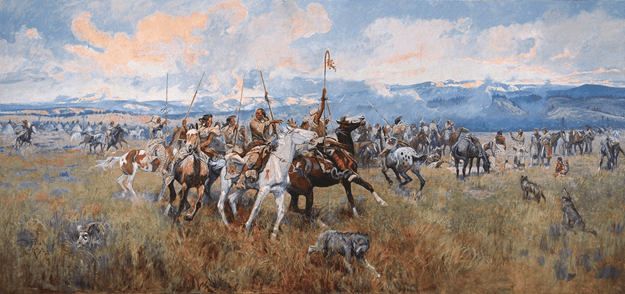
This course traces the rise of the “American West” in American consciousness from the early 19th century until today. Understanding that U.S. expansion looks different for the indigenous cultures of the trans-Mississippi West, the course asks students to re-think the “myth of the West” with the reality of western development. To do so, this course introduces four ways to think about the American West: as lines of frontier settlement, as borderlands zones of intercultural mixing and policing, as a distinct region with shared characteristics, and as romanticized imaginaries that become powerful myths.


You must be logged in to post a comment.