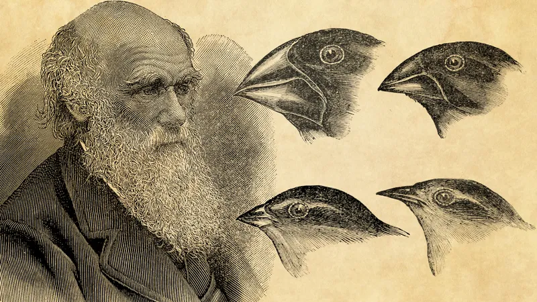
Charles Darwin’s theory of evolution through natural selection is one of the greatest (maybe the greatest) intellectual and cultural turning points in the modern era. Since the Origin of Species was published in 1859, the way we have thought about science, philosophy, religion, and society has been profoundly altered. In this course, we will study Darwin, his theory, and its impact from both a scientific and humanistic perspective. That is, we are going to integrate a study of evolution (science) with a study of society (humanities) to better understand the reciprocal ways that Darwin’s theory shaped—and was shaped by—society, from the middle of the nineteenth century to today. This course, then, is broadly organized into two main units. The first part investigates in detail Darwin’s theory, the way he came to it, the social and scientific context in which it emerged, and its reception among scientists. The second part will explore the broad ramifications of his theory, including debates about science and religion, eugenics, sociobiology, and other tricky contemporary issues.
Students will read selections of philosophical, literary, and theological writing which address major components of the fields contributing to medical humanities, which will include discussions of the following topics: medical humanities as a discipline, ethics, medical ethics, bioethics, clinical ethics, narrative, patient care, or religious care. Students explore crucial questions about health, well-being, medicine, and social inequality in the twenty-first century, with a particular focus on how narrative works in medical contexts.
While those majoring in biology, pre-med, and nursing will enjoy understanding the history of biological thought, this course does not require any scientific background. Rather, by studying Darwin’s ideas in their broader social, cultural, and political contexts, you will begin to put together an intellectual toolbox that will allow you to critically analyze science and enter, with an informed judgement, into the fascinating, complex, and controversial debates taking place today concerning biology’s increasing role in our society.


You must be logged in to post a comment.